
This is the second to the last post of my “Fond Memories of Brazil 2009” series. I wish I could say that we saved the best of our Brazil experience for last, but as you can probably guess from my overly enthusiastic posts about Jericoacoara and Salvador, those two places were the ones that really stole our hearts. But to be fair to Rio, we would’ve enjoyed our time there a lot more had Mother Nature played nice. All we wanted to do in Rio was go hang gliding and lay out on its world famous beaches, but, spoiler alert, we did neither.
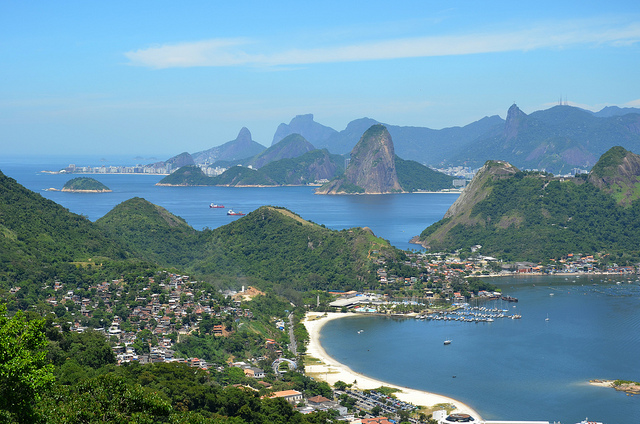
Gorgeous Rio de Janeiro: photo credit Rodrigo Soldon
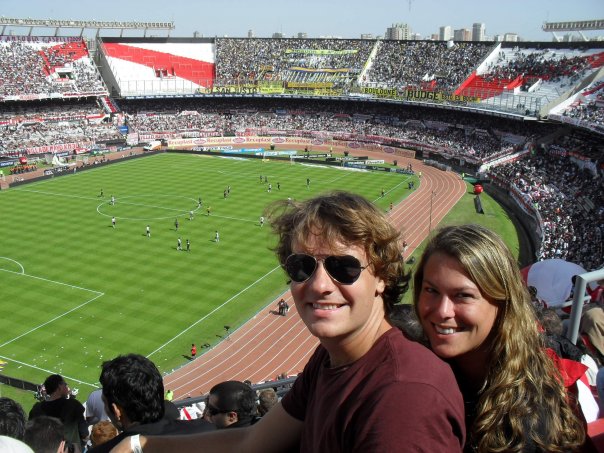
We did, however, still get to watch a soccer match at Maracanã and visit Búzios, a posh nearby beach town, with one of my friends from college who was living in São Paulo at the time. I know that most of these “Fond Memories of Brazil 2009” post have little to do with honeymooning, which is admittedly a bit confusing as this is a honeymoon blog, but Búzios was definitely a worthy honeymoon destination. Part 1 has more to do with Rio, but come back next week for Part 2 to read why Búzios is great for honeymoons in Brazil.
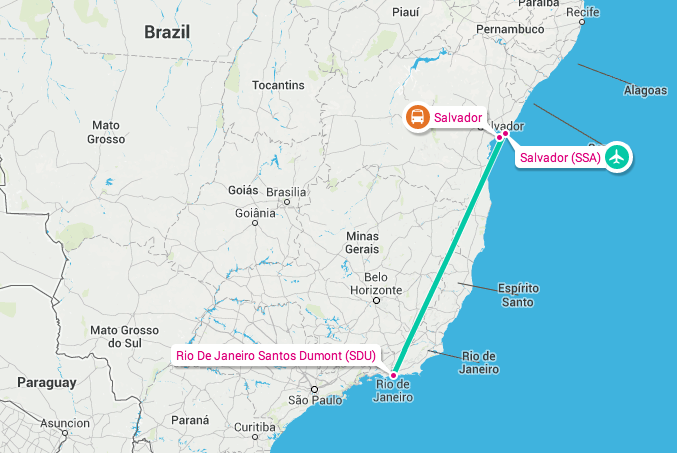
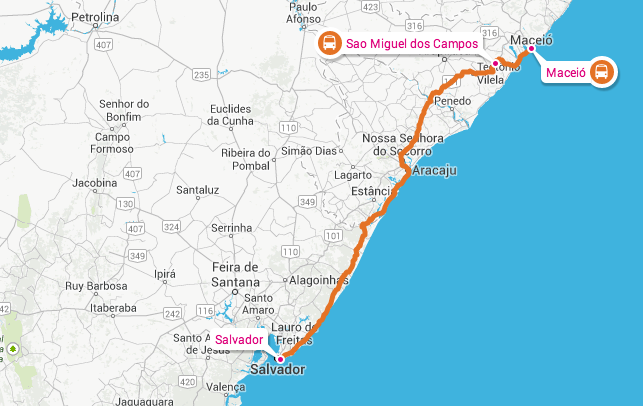
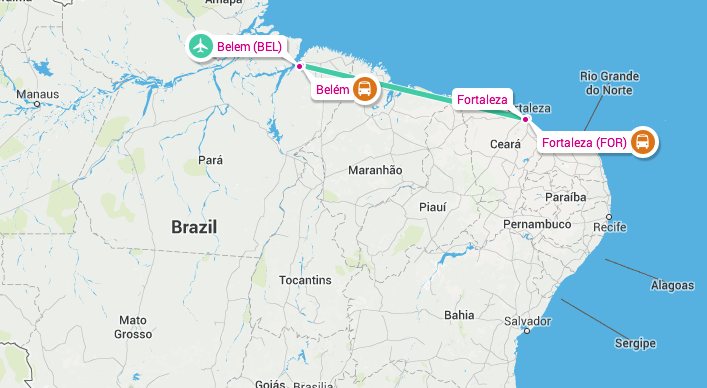
Two hour flight from Salvador to Rio: map credit Rome2Rio
In lieu of a 27+ hour bus ride from Salvador to Rio, we opted for a two hour flight, then took a taxi to our hostel in the Catete neighborhood (pronounced “kah-tetch”). Aaron’s email is below:
Q: Before this trip, you told your parents that you wouldn’t go to Colombia and that you wouldn’t go to the favelas in Rio. And you’ve broken both of those promises now, haven’t you?
A: Well … yeah. But when I said those things, I didn´t know that there were safe, well-organized, fascinating favela tours.
The favelas (again trying not to sound like a Wikipedia entry) are these huge shantytowns built into the hills, areas the government has basically given up on, areas with no infrastructure, areas controlled by drug dealers (our favela was run by a gang with the very un-gangsta sounding name “Friends of Friends,” which I guess does sound a little Mafia-like). It sounds horrible and lawles, but really there is less petty crime in the favelas because the drug dealers won´t allow any non-drug-related crime (they don´t want the police to have an excuse to raid the favelas.
Since this kind of area is obviously fascinating, tours have sprung up recently, all of which work with the communities they visit, and give a lot of money back. As a result, we felt very welcome the whole time we were there. And safe. Our guide even made fun of our disposable camera, thinking we considered it too dangerous to bring a digital one. Of course, our digital was still broken, which is too bad, since every view in the favela has enough texture to be an award-winning photograph.
Anyway, our favela, Rocinha, was the largest in the city, with over 200,000 people, all of whom appeared to be siphoning electricity from one mid-sized generator at the top of the hill. Since the favela is surrounded by rocky cliffs on one side and a national park on the other, there is no room to build but up. As a result, there are no roads in the favela, just an endless series of tunnels and catacombs leading in all directions.

Favela da Rocinha: photo credit Scott Hadfield
Q: And, after months of bashing your head on pretty much every hanging thing in South America, were you finally able to use your freakish height for good in the favela?
A: Surprisingly, yes. Our tour spent a fair amount of time in the day care that the tour sponsors, where we played with the kids and generally smiled at everyone. While there, I was able to reach a ball that was stuck between some wires. So, y´know, I guess I wasn´t TOTALLY imposing on South American culture the ENTIRE time I was there. Now someone bring me a caipirinha.
Q: Um … there’s no one here. Anyway, what’s up with the hang gliding?
A: Soon, hopefully. The cliffs around the city make for excellent hang gliding, with a view of the city, the ocean, and the jungles all at once. We were supposed to go yesterday, but there was no wind, so we went to Copacabana Beach instead. We rescheduled for this morning, but the clouds were too low, so we went up to the Christ the Redeemer statue instead. Now, we hope to go tomorrow.
Q: Copacabana? Christ the Redeemer? Those are some pretty solid backup plans. Want to talk about them?
A: Copacabana, despite being one of the most famous beaches in the world, was only average in terms of beach quality, though there were a series of incredibly complex sand sculptures commemorating the 2016 Olympics. It was like Old Yankee Stadium … you go for the mystique, not the actual experience. And, since we´re staying only three Metro stops away in the Catete neighborhood (first time on a South American subway … yeah!), it´s easy to stop by for an afternoon.
The Christ statue is probably even more famous, and you can tell by the dozens of camera-waving tourists all trying to pose for the exact same picture in front of it. Still … huge statue on a cliff overlooking the city = cool thing to see. Not much more to say about it, really.
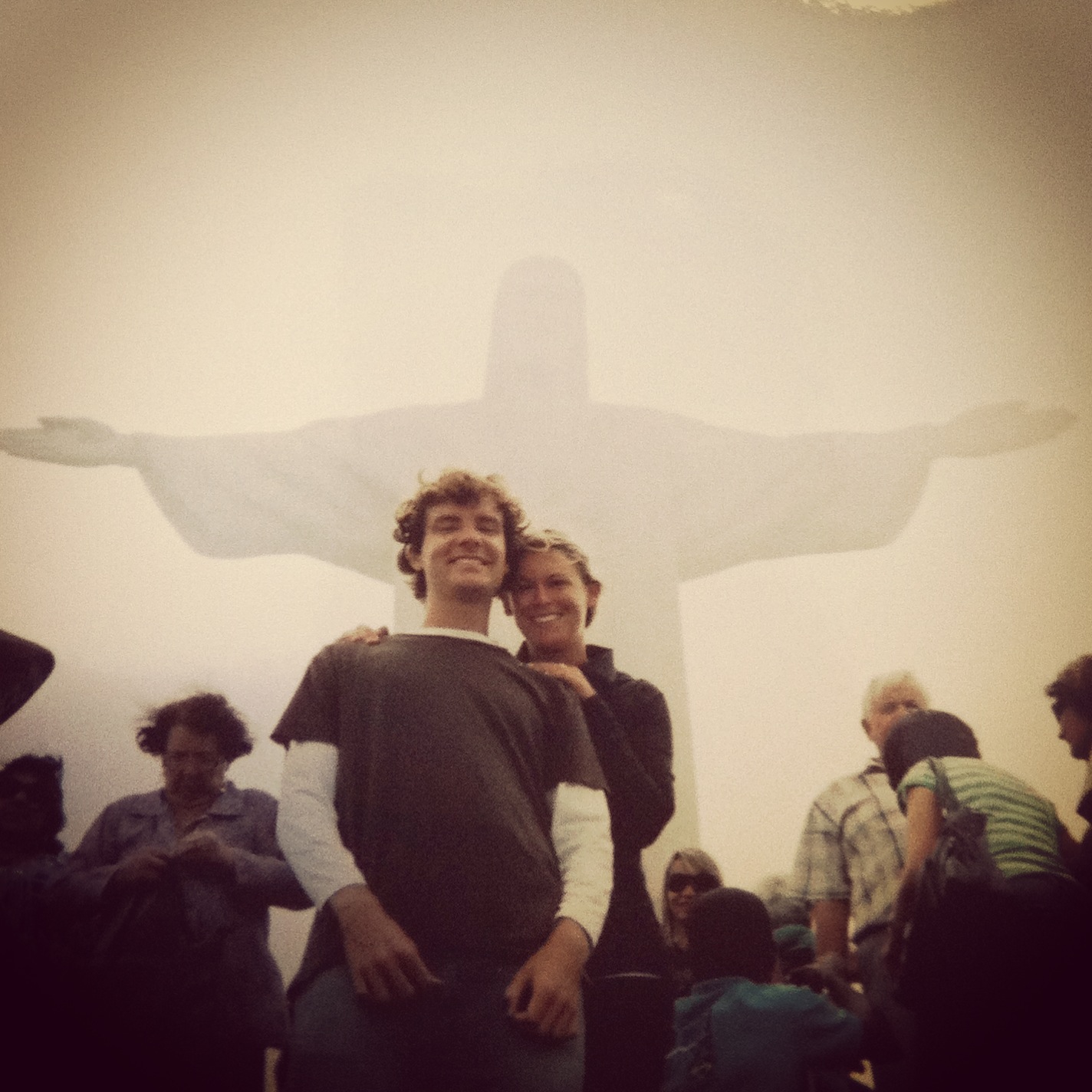
We actually have a photo from this! (Taken on a disposable camera, ha!)






















 Peonies to Palm Trees


